 gensai.ai
In Venice, during the Biennale of contemporary art, an eighteenth-century palace houses works of art you can talk to. A metal flower asks us questions. A black glass sculpture carries the memory of a family. An installation lets you hear the voices AI erases.
What is the point of a work of art that answers? A visit to the “Strange Rules” exhibition at Palazzo Diedo offers some answers, and a few tips for those who design voice experiences.
Strange Rules: an exhibition about the rules that govern machines
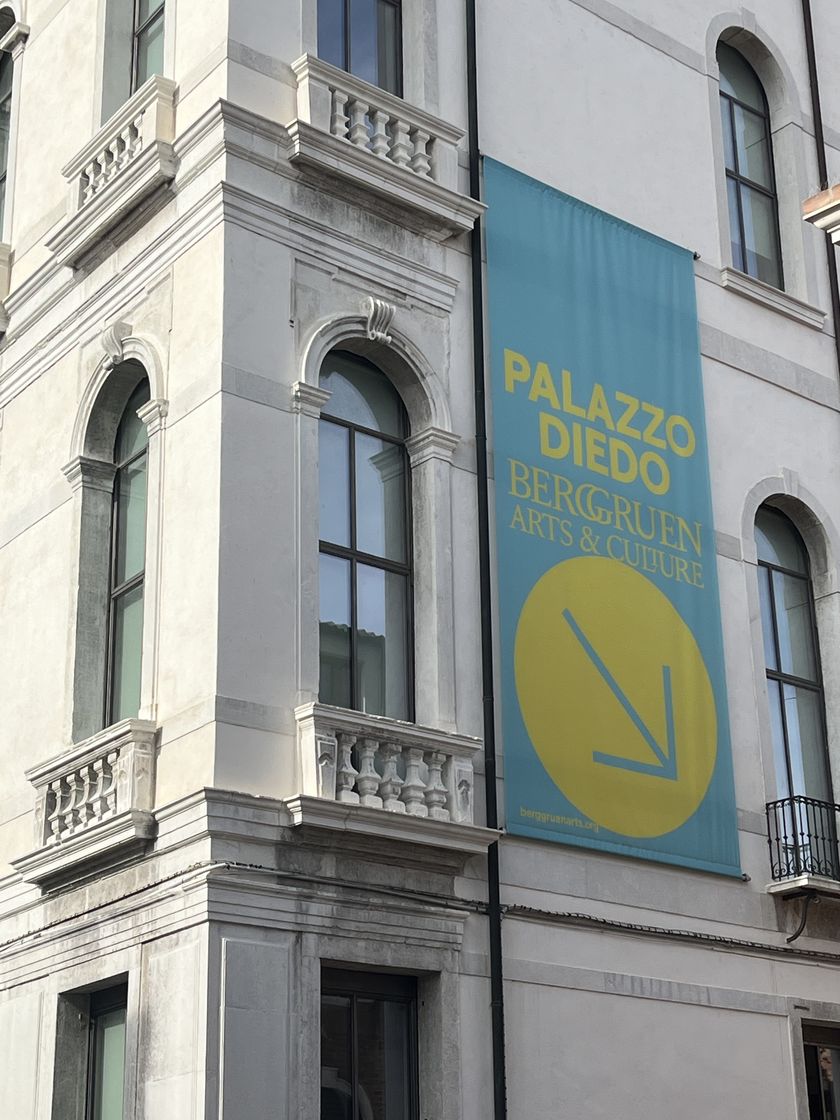
The “Strange Rules” exhibition runs from 4 May to 22 November 2026 at Palazzo Diedo, an eighteenth-century palace in the Cannaregio district, at the same time as the Venice Art Biennale.
Its guiding idea is “Protocol Art”: works that are not objects but rules. Algorithms, AI models, platforms and conventions become the very material artists work with. Around twenty of them are brought together.
Talking to a metal flower: the Plantoids
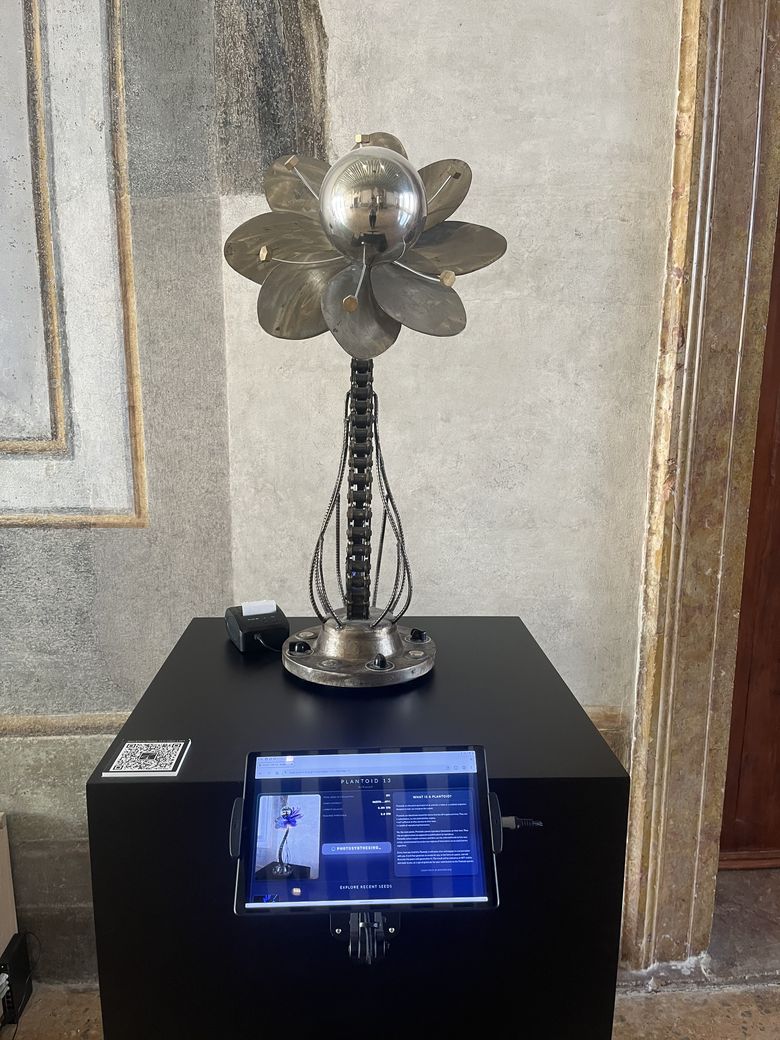
In the rooms of the palace, three metal flowers await visitors. These are the Plantoids by Primavera De Filippi, a project launched in 2014. Each one is an artificial life form: a body of chains and steel, and a “spirit” housed in a contract written on the Ethereum blockchain.
These flowers speak. They introduce themselves, ask questions in English and listen to the answer. A light at the heart of the corolla changes colour while the flower thinks, then turns red when it speaks. It can answer our questions, sing us an opera aria or recite a poem, which a small printer returns on a ticket, with a QR code.
The tone is surprising. The replies are lively, often ironic: the flower has a character, and that is what makes you want to keep the conversation going.
N'TOO: a family memory entrusted to an AI, which stayed silent
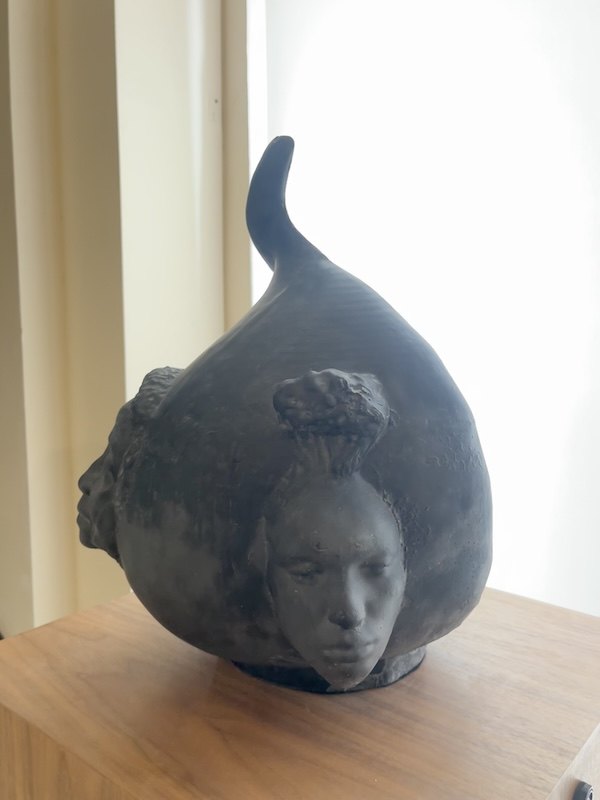
Further on stands a black glass sculpture with several faces. “Not the Only One”, or N'TOO, is a work by Stephanie Dinkins created in 2018. The artist entrusted an AI with the memory of her African American family, drawn from the stories of three generations of women. Visitors are invited to talk to it.
That day, N'TOO did not answer. A few sounds, then nothing. It usually speaks, said the person in charge of the room.
This breakdown says something about the work. Stephanie Dinkins set aside large datasets, which she considers biased, to use only her family's words. She herself acknowledges that N'TOO is sometimes hard to understand and sometimes refuses to answer. An AI fed with little data is fragile, but it only speaks with the words entrusted to it.
Other works that listen, and one that denounces
The Plantoids and N'TOO are not the only works in the exhibition that react to the voice.
- On the ground floor, the installation by Holly Herndon and Mat Dryhurst puts microphones at visitors' disposal. AI agents follow the conversations in real time and translate their mood into music generated continuously in the room.
- In “Voyager”, Trevor Paglen seats the visitor in a hypnosis booth. The visitor answers aloud, a sensor measures their pulse, and an AI-generated voice adapts its story to what it hears and what it measures.
- With “Phantomatics”, Agnieszka Kurant plays synthetic voices speaking around a hundred languages invented by an AI from existing ones.
“Waterfalls”, by Lawrence Abu Hamdan, shows the other side. The artist looks at a technology used by call centres to erase the accent of their operators, in India, Haiti, the Philippines or Pakistan, and replace it with a neutral voice. Through headphones, the left ear hears the original voice, the right ear the corrected version.
The same technology that lets a work of art answer can therefore be used to standardise those who speak.
Elsewhere in Venice, other ways artists use AI
During the 2026 Biennale, AI also appears in other exhibitions across the city. Three uses stand out.
- AI as a studio tool. At the Galleria di Palazzo Cini, the painter David Salle trained a model on his own paintings from the turn of the 1990s. The generated compositions are printed on linen, then reworked by hand in oil and charcoal. His phrase, “The machine has no taste”, sums up the approach: the taste remains the painter's.
- AI as a target. At Palazzo Franchetti, the duo Eva and Franco Mattes presented “RAGE BAIT”: deliberately botched cat images, designed to be scraped by bots and pollute the training data of models.
- AI as material for prediction. In the Finnish pavilion, Jenna Sutela composes “Aeolian Suite” from meteorological data and forecasting models, and gives a voice to five winds of Venice.
These approaches share something with the works at Palazzo Diedo: AI is never shown for its own sake. It serves an idea, and the artist keeps control of the rules.
Under the hood: how a work of art manages to answer
Behind every work that converses lies the same technical chain, in three steps.
- Listening. A microphone picks up the voice, a module detects when the visitor has finished speaking, then speech recognition turns sound into text. This is the most exposed step: room noise, accents and mixed languages cause most misunderstandings.
- Composing the answer. A language model writes the reply. An instruction sets its character, tone and limits. When accuracy matters, it draws on a validated knowledge base, following the RAG principle. N'TOO takes another route: a model trained directly on a small corpus, more faithful but more fragile.
- Speaking. Speech synthesis gives the text a voice, sometimes created specially for the character.
Everything depends on how the steps are chained. Each one adds a delay, and beyond a few seconds the visitor loses interest. Some installations now use models that go straight from voice to voice, for a smoother flow. Choosing between the cloud and a computer or tablet installed on site depends on the venue's network and the sensitivity of the exchanges. The Plantoids' three light states, listening, thinking, speaking, make this mechanism visible.
What these works teach about voice experiences
These works are not products, but they face the same difficulties as a museum voice guide or a reception assistant at an event.
- Hold up on site. A voice experience is judged amid noise, crowds and unreliable networks. It is tested in the venue, with the public, before opening.
- Show that you are listening. The Plantoids' light tells visitors when to speak and when to wait. Without that signal, they talk into the void.
- Give it a character. A clear personality makes the exchange memorable.
- Prefer silence to invention. N'TOO stays silent rather than make things up. In a museum as in a company, an AI should answer from validated sources and be able to say it does not know. That is the principle of AI-augmented storytelling.
- Leave a trace. The printed poem extends the exchange after the visit.
The UX design of the experience is essential. So is the scenography: it lets visitors quickly understand how it works and fully enjoy the experience.
Experiences that are still rare, and much left to invent
A work that answers changes the visitor's place: no longer a spectator, the visitor becomes a conversation partner. Outside exhibitions devoted to technology, such experiences are nevertheless still rare in museums and at events. A few have led the way.
- In Florida, the Dalí Museum has since 2024 invited visitors to pick up a lobster telephone and question the painter. His voice and answers are recreated from his writings and archival recordings.
- In Paris, the Musée d'Orsay let its visitors converse with Vincent van Gogh, based on some 900 of the painter's letters and under the supervision of a specialist.
- In Versailles, around twenty statues in the gardens have been answering walkers' questions since 2025, on their phones, from a dedicated knowledge base.
These projects have one thing in common: none lets the AI improvise. The corpus is limited to the sources, institutions and specialists are involved, and the public knows it is talking to a recreation.
On these conditions, voice AI can enrich a visit without damaging an artist's work or the truth of a story. Much remains to be invented: works that answer in the visitor's language, historical figures who cite their sources, tours that remember the previous conversation.
Gensai explored this path with the “Monsters of the Oceans” installation: the whole chain runs locally, so as to depend on nothing, and above all to be as environmentally frugal as possible: no Internet, no cloud, no tokens. The approach is described in the article on making the oceans speak with frugal AI.