 gensai.ai
AI in museums: how is artificial intelligence transforming the cultural experience?
SITEM, held at the Louvre, brings together museum, culture and tourism professionals around the sector's innovations every year.
Attending to meet several agencies and partners, one observation stands out: artificial intelligence is no longer a forward-looking topic: it is starting to be genuinely built into the experiences offered to visitors.
Why is there so much talk about AI in museums today?
Cultural institutions face several major challenges. The first is bringing audiences back to culture, in a context where digital habits have profoundly reshaped expectations. Content also needs to be made more accessible and educational, while capturing the attention of varied audiences, some of them unfamiliar with traditional museum conventions. On top of this come operational constraints, such as managing large visitor flows or welcoming international audiences.
In this context, artificial intelligence makes it possible to evolve existing formats. It turns static content into interactive experiences, moves audio guides towards conversational logic and opens the way to personalised journeys.
The goal is not to replace existing installations, but to enrich them and make them feel alive.
How does AI create new interactions with culture?
A particularly inspiring case comes from The Dalí Museum with its Ask Dalí experience.
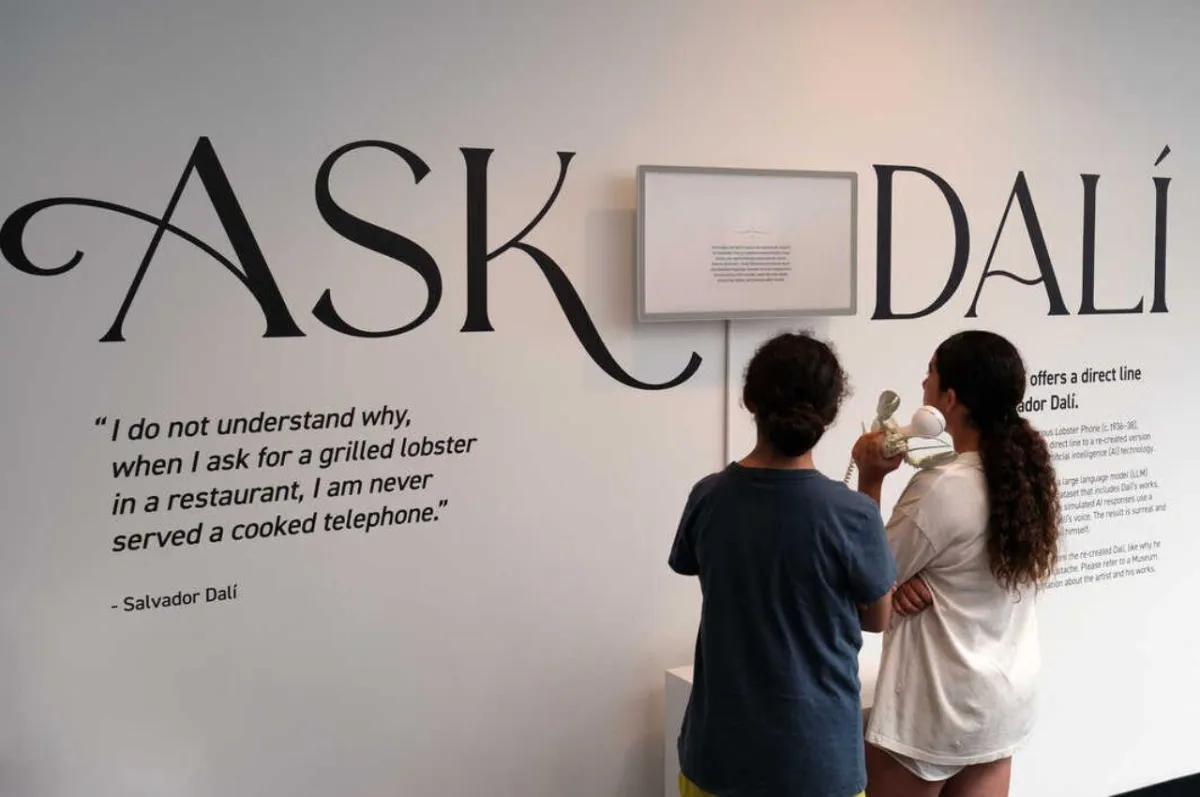
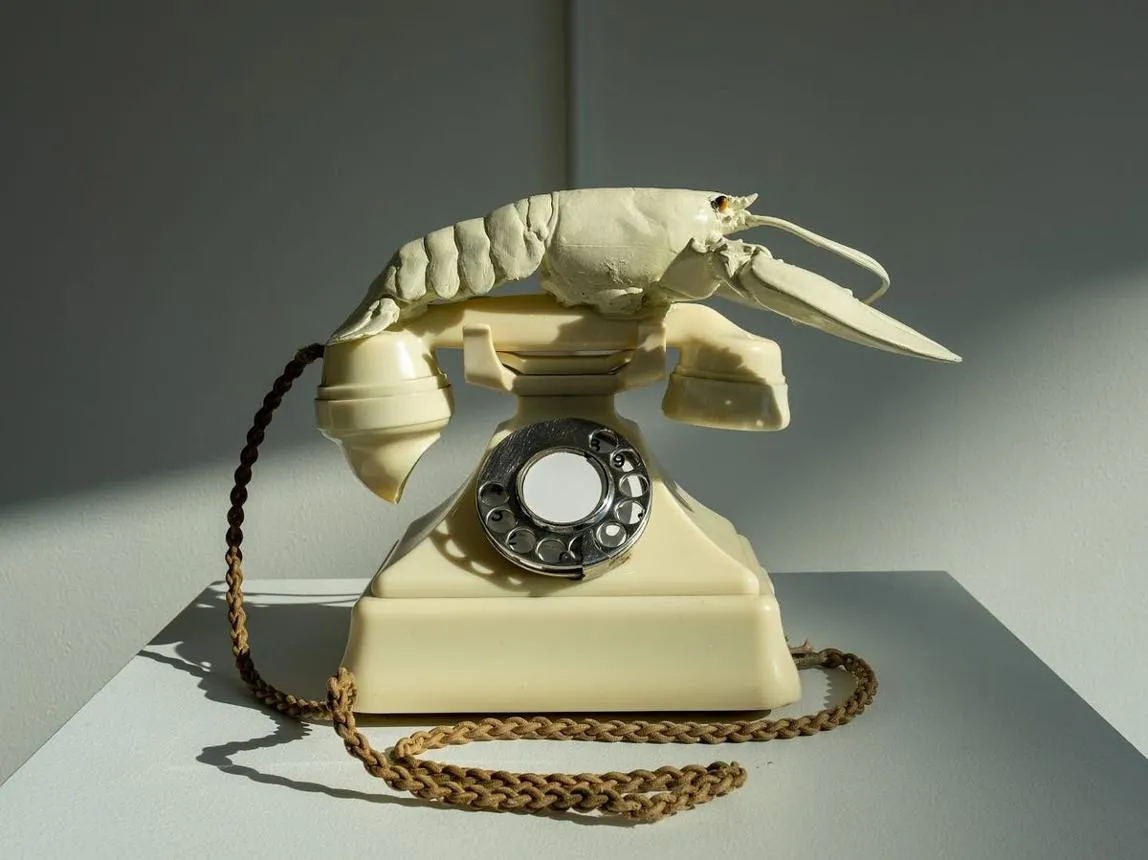
The installation is built around an iconic object: a lobster-shaped telephone, drawn directly from Salvador Dalí's world.
The principle is deliberately simple. The visitor picks up the phone, asks any question, and a voice answers as if Dalí himself were speaking.
The experience works particularly well because it relies on immediate interaction, with no complex interface. It introduces a playful, surprising dimension while creating strong immersion. Visitors no longer feel they are consulting content: they feel they are in dialogue with the artist.
Here, AI does not merely transmit information. It becomes a vehicle for experience.
How does an experience like "Ask Dalí" actually work?
Behind this immersive experience, several technical building blocks are combined coherently.
A knowledge base is first assembled from reliable content: interviews, writings, archives and biographical material. This base plays a central role: it anchors the AI's answers in verified information.
This approach is what is known as RAG (Retrieval-Augmented Generation): a system in which the AI retrieves information from a defined corpus before generating an answer.
On top of this base, a language model (LLM) is used to formulate the answers. A voice layer completes the setup, with speech recognition to understand the visitor's question and speech synthesis to deliver the response.
Contrary to a common assumption, the AI does not "guess". It relies on a structured corpus to produce coherent, contextualised answers.
The editorial work remains decisive. It guarantees the consistency of the answers, respect for the artist's tone and the overall reliability of the experience.
👉 https://thedali.org/exhibit/ask-dali/
What are the concrete use cases for AI in museums and culture?
Beyond this example, several uses are clearly emerging and answer concrete needs.
AI first improves cultural outreach by making it possible to ask questions in natural language. It adapts the level of discourse to the visitor and offers additional explanations on request, making the experience more accessible.
It also transforms traditional audio guides. Where those offered fixed content, AI introduces interaction. Visitors can ask questions, go deeper on a subject or adapt their route in real time.
The visitor experience itself is enriched through personalised recommendations, content contextualised by location or interests, and immersive installations combining voice, avatars or interactive setups.
In parallel, AI also adds value internally. It makes documentation easier to access, supports teams in outreach work, helps generate educational content and contributes to preparing visits or exhibitions.
What role for AI in tourist offices and leisure?
Tourism players, also present at SITEM, are following these developments closely. AI makes it possible to offer permanently available assistants, able to answer in several languages and recommend activities based on the visitor's profile: by phone, WhatsApp, on the website or through an avatar.
It accompanies the user before, during and after their visit, creating continuity in the experience.
How is AI also transforming events and experiential marketing?
Beyond museums and tourism, these uses extend naturally to events, a sector where user experience is central.
Event agencies are increasingly exploring AI to offer interactive, immersive installations directly inspired by approaches like Ask Dalí. The aim is to create memorable experiences able to capture attention in environments where attention is heavily contested.
In this context, AI makes new formats possible. Conversational assistants can accompany participants during an event, answer logistical questions or guide visitors in real time. Voice or embodied experiences can also be set up to create original interactions: with a personality, a brand or a narrative world.
AI also makes it possible to personalise the experience at scale. Each participant can receive recommendations suited to their profile, access specific content or follow a different journey.
Finally, these technologies extend the experience beyond the event itself. An assistant can keep interacting afterwards, share content, answer questions or maintain the connection with participants.
AI thus becomes a tool serving the overall experience, not merely a one-off installation.
Is AI in culture a gimmick or a real transformation?
Not all projects are equal, and some remain at the demonstration stage. However, the most successful experiences share common characteristics. They deliver real usefulness to the visitor, fit smoothly into the journey, put technology at the service of content and take an outreach-centred approach.
The Ask Dalí example shows that AI can go beyond the "wow" effect. It can become a genuine tool for cultural transmission, capable of making works more accessible, more alive and more engaging.